Chicken Road: Separating the Real Game from the Scam Economy Around It
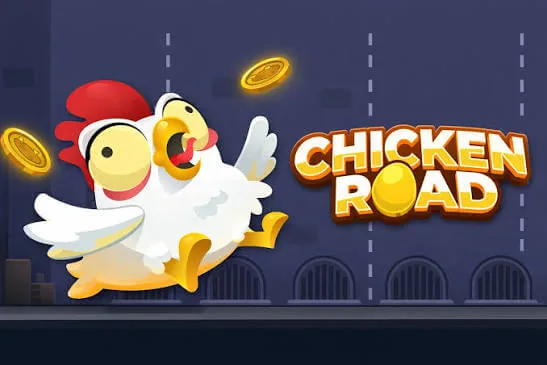
Here's what's not quite right: a game called Chicken Road — or Chicken 2 Road, depending on who's promoting it — shows up in TikTok ads, Instagram stories, and YouTube shorts with impossible win streaks, celebrity deepfakes, and download links that lead nowhere legitimate. The comment sections fill with five-star testimonials posted hours apart by accounts created the same week. It looks like a scam because half of it is.
The game itself exists. InOut supplies it to licensed operators, the maths checks out, and British players can access it legally through UKGC-registered sites. But the hype economy built around it — fake apps, cloned sites, affiliate spam, manipulated footage — is designed to separate you from your money before you ever see the real version. This is what you need to know to tell one from the other.
What Chicken Road actually is, and what it isn't
Chicken Road is a crash-style instant game from InOut. A cartoon chicken crosses a road one lane at a time; each lane passed safely raises your multiplier. Cars spawn randomly, and if one hits the chicken, the round ends and the stake is lost. You cash out manually whenever you choose — before the next car appears. The tension comes from the same place it does in Aviator or Spaceman: greed versus timing.
Four difficulty modes change the number of lanes and collision probability. Easy gives you thirty lanes and the lowest risk; Hardcore cuts it to eighteen with the highest chance of being hit. The game uses provably fair cryptography, so each outcome can be verified after the round. Stake limits run from £0.10 to around £200, with a maximum win capped at £20,000 — though individual operators may apply their own limits on top.
What it isn't: a standalone app you download from a Telegram link. A guaranteed strategy shared by an influencer with 300 followers. A site that asks for your credit card before showing you a demo. If any of those appears in the journey, you've left the legitimate version behind.
The scam layer: fake apps, rigged clones, and monetised hype
Most of the fraud happens in the discovery phase. Sponsored posts promise 'original APK', 'official app', or 'direct download' — none of which exist for Chicken Road. InOut doesn't distribute games as standalone installers. Any .apk or .exe file you're offered is either malware, a data harvester, or a reskinned slot that pays nothing. The Play Store and App Store do host real-money gambling apps from UK-licensed operators, but Chicken Road typically runs in the browser.
Then there are the clones: unlicensed sites that copy the interface, change the RTP, and route your deposit to an offshore processor with no comeback. Some are pixel-perfect recreations; others don't bother hiding the stolen assets. They'll take your money, show you a few winning rounds to build confidence, then freeze withdrawals behind endless verification requests.
- Deepfake ads showing footballers or reality stars 'revealing the secret' — the footage is manipulated, the account isn't theirs.
- Montage videos of impossible streaks — ten cashed-out rounds in a row at 20× — edited together from demo play or staged on a private server.
- Affiliate sites that rank 'top Chicken Road casinos' by commission rate, not licence status, and bury the UKGC register link three pages deep.
- Bought reviews on Trustpilot, often posted in broken English from accounts with one other review, written six months ago, for crypto wallet recovery.
If you land on a site that isn't named in the UKGC register, or doesn't list a licence number in the footer — and you can't verify that number in the public database — you're not playing the real game. You're funding someone's server bill in Curaçao.
How to find the legitimate version in sixty seconds
- Open the UK Gambling Commission's register at gamblingcommission.gov.uk and search the operator name.
- Check the footer of the site for a remote licence number — it should be five digits, sometimes formatted 000-000-000 — and match it to the register entry.
- Verify the payment methods: debit cards (Visa, Mastercard), PayPal, Apple Pay, or Open Banking. Credit cards have been banned for gambling since 2020. If the cashier accepts Skrill but not Faster Payments, be suspicious.
- Look for GAMSTOP branding and links to BeGambleAware. If the responsible gambling section is an afterthought or missing, the site isn't complying with UK advertising standards.
Demo play is common on licensed sites, though many now gate it behind age verification. If you can't test the game without depositing, that's not always a red flag — it's a KYC requirement tightened in recent updates — but it does mean you'll need to verify identity and address before you see a single round.
What the UKGC licence actually protects, and what it doesn't
A valid licence guarantees certain minimums: funds held in segregated accounts, SSL encryption, dispute resolution through IBAS or an equivalent ADR, and compliance with stake caps. Since April, the £5-per-spin limit applies to all slots for players 25 and over; 18–24-year-olds face a £2 cap. Crash games sit in a grey area — some operators class them as slots, others as table games — but most apply the same limits to be safe.
Affordability checks kick in from £150 net deposits per month, using credit-reference data at the first stage. Operators can request payslips or bank statements if the threshold rises. The system is designed to catch problem gambling early, but it also means withdrawal delays if your deposit pattern changes suddenly.
What the licence doesn't protect: your bankroll. The game is still negative expectation over time. Provably fair confirms the outcome wasn't rigged after the fact; it doesn't mean you'll break even. The house edge is baked into the spawn probabilities, and the cash-out mechanic exists to give you control over when you lose, not whether.
Your winnings are tax-free — the operator pays the Remote Gaming Duty, now 40% as of April — but that only matters if you withdraw in profit. First-time cashouts take 24–48 hours while documents are checked, sometimes longer if you uploaded a photo of your driving licence at an angle. Subsequent withdrawals via e-wallet or Faster Payments clear in a few hours to two working days.
The trap built into the format: when hype meets volatility
Crash games feel different from slots because you're making an active decision every second. That sense of control is real in the moment — you do choose when to cash out — but it doesn't shift the probabilities. The chicken crosses lanes according to a weighted random function; your timing can't predict the next spawn. Over a long enough sample, you'll lose more rounds than you win, and the multipliers you cash at won't cover the difference.
Hardcore mode pays better when you survive, but the collision rate is high enough that most rounds end in the first third of the road. Easy mode gives you more breathing room, but the multiplier climbs slowly. Either way, the format encourages one more round after a loss, one more lane after a near-miss. That loop is why the game exists.
- Streaks mislead: three wins in a row feels like momentum, but the next round is independent. The RNG doesn't remember.
- Cashout regret: banking at 3× and watching the chicken reach 12× makes you hold longer next time. That's when you get hit at 1.4×.
- Chasing demo results: free play runs the same maths, but twenty minutes of demo doesn't predict twenty minutes of real stakes. Variance works both ways.
If you're depositing more than once in a session, or funding the account again the same week, the game has already done its job. A licensed operator will let you set deposit limits, loss limits, and session reminders before you start. Use them. The UKGC mandates these tools, but they only work if you configure them honestly.
What to do if you're playing, or thinking about it
Assume the worst: that the version you found first isn't the legitimate one. Start with the UKGC register, work backwards to the operator, then verify the game appears in their lobby. If the path went the other way — ad to landing page to instant deposit — retrace your steps and check the licence number.
Set a deposit limit at account level before your first stake. Most sites allow daily, weekly, or monthly caps, and they take effect immediately or after a cooling-off period. Once the limit is in place, you can't raise it for 24 hours — sometimes longer. That friction is the point.
If you're already in deeper than planned, GAMSTOP offers self-exclusion for six months to five years. One registration blocks every UKGC-licensed site. It's not reversible during the exclusion period, and it won't stop unlicensed operators, but it removes the licensed ones from reach. BeGambleAware provides confidential support without judgment; the number is 0808 8020 133.
You must be 18 or over to play. Every site checks this before you deposit, and some recheck before withdrawal. If you're helping someone under 18 access the game — setting up an account in your name, lending a card — you're committing an offence under the Gambling Act, and the operator will close the account and void the balance when they find out.
FAQ
Is Chicken Road rigged, or is it provably fair?
The version supplied by InOut to licensed operators uses provably fair cryptography, meaning you can verify each round's outcome after it resolves. That confirms the result wasn't altered after your bet. It doesn't mean the game is balanced in your favour — the house edge is part of the design, built into the spawn probabilities. Clones and unlicensed sites may not honour the same system, which is why playing on a UKGC-registered operator matters.
Can I download a Chicken Road app on my phone?
There is no official standalone app distributed by InOut or legitimate operators. Any .apk file offered through Telegram, Instagram, or unlicensed sites is either malware or a rigged clone. The real game runs in your browser, and some UK-licensed operators package their full casino as a web app you can add to your home screen. If you're asked to sideload an installer or disable security settings, walk away.
How do I know if the site I'm on is licensed in the UK?
Check the footer for a UKGC remote licence number — five digits, sometimes hyphenated — then verify it in the Gambling Commission's public register. The site should also link to GAMSTOP and display BeGambleAware branding. Payment methods are another tell: credit cards have been banned since 2020, so if the cashier accepts them, the operator isn't following UK law. Faster Payments, debit cards, PayPal, and Open Banking are standard for licensed sites.
What's the maximum I can win, and will I pay tax on it?
The game's maximum win is capped at £20,000, though your operator may impose a lower site-wide limit. You won't pay income tax or capital gains on gambling winnings in the UK — the operator already pays 40% Remote Gaming Duty on gross revenue. That said, first-time withdrawals take 24–48 hours for KYC checks, and you'll need to prove the payment method is in your own name. Subsequent cashouts via e-wallet or Faster Payments usually clear within a day.